 NexSHOPX-官方新闻
In the 2026 wave of global expansion, whether for multi-brand e-commerce sellers deeply cultivating Europe, America, and Southeast Asia, or B2B foreign trade and SaaS teams shifting to "AI + omnichannel collaboration" for customer acquisition, business launch and expansion are highly dependent on underlying overseas accounts and tool subscriptions. However, in actual operations, many teams still follow the extensive model of "buy a few scattered accounts whenever an employee needs one."
This lack of unified standards in procurement often leads to concentrated outbreaks when business scales: operations buy the wrong account specifications, limiting the start; overseas AI and membership tools fail to renew due to cross-border payment issues; employees leave with bound personal verification information; and even after-sales warranty is lost due to missing the first-login deadline or illegally modifying information.
To turn accounts from "consumables" into controllable "enterprise digital assets," global teams need to incorporate enterprise overseas account procurement into standard operating procedures (SOPs). Compared to the one-stop multi-platform procurement overview we have already discussed, this article will directly切入 from the perspective of enterprise department structure and role functions to break down a practical, layered centralized procurement and acceptance management guide.
I. Why Do Global Teams Need to Upgrade "Overseas Account Procurement" to a Standard SOP?
When a team exceeds 5 people or operates more than 2 overseas sites simultaneously, the hidden costs of scattered purchasing quickly erode profits. Establishing an enterprise-level procurement SOP mainly addresses the following three core pain points:
- Eliminate trial-and-error costs from "specification mismatches": Different business stages have vastly different requirements for account weight. For example, using a newly registered blank account for high-intensity ad delivery or mass adding contacts easily triggers platform risk control; conversely, if all testing phases that only need to receive registration verification codes purchase high-priced aged accounts, it wastes budget.
- Break through cross-border payment and bulk bargaining channels: Overseas SaaS and AI tools generally rely on international credit card recurring charges, and enterprises frequently face card decline or subscription drop issues. Through centralized procurement on marketplaces like NexSHOPX that support RMB (CNY) settlement and are compatible with Alipay and USDT payments, not only can payment barriers be resolved, but bulk orders can also directly contact customer service for bargaining, significantly reducing procurement costs.
- Standardize asset ownership and after-sales boundaries: Clarifying "who purchases, who first logs in, how to configure two-factor authentication (2FA)" can prevent asset loss due to team member changes and ensure every batch of accounts circulates safely within the warranty framework specified on the product page.
II. Role-Based Breakdown: Account Configuration Checklist for Five Core Business Flows
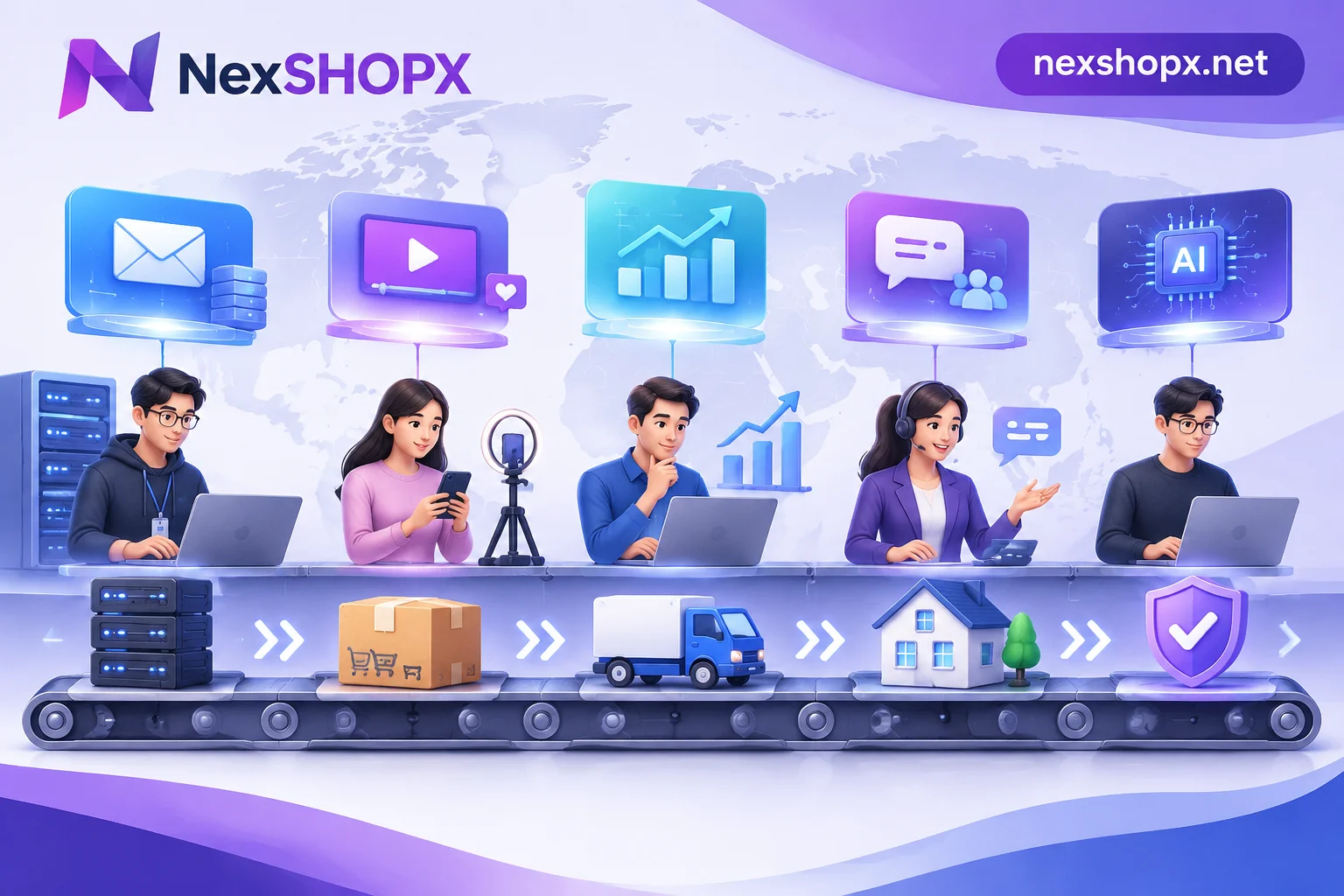
To help procurement managers and business supervisors efficiently align requirements, we can break down the overseas accounts and memberships needed for daily enterprise operations into five standard modules, precisely configured by role and need:
1. Basic IT and Store Infrastructure Role: Underlying Passports and E-commerce Foundation
The first step of any overseas business is to build a stable, independent email system and app download environment.
- Enterprise Email Matrix: For receiving third-party platform verification codes or automated development testing, you can batch configure brand-new exclusive Gmail accounts (some specifications include auxiliary recovery email), or choose Outlook / Hotmail email based on cost requirements (note the distinction between ready-to-use new accounts and low-priced "locked pending unlock" accounts that require the buyer to provide a phone number for verification, as well as whether IMAP/POP/SMTP protocols need to be enabled) and overseas email accounts such as Yahoo, Proton, Onet.pl. If you need to directly log into YouTube, Play, Drive, Workspace, or use "Google Sign-In" to authorize third-party services, you should directly purchase multi-region Google accounts that have passed phone verification (for specific specification differences, refer to the Gmail and Google full ecosystem account configuration guide).
- Overseas App Environment: Mobile operations teams downloading region-exclusive apps or subscribing to services need to stock Apple IDs for multiple regions such as US, Japan, Hong Kong, Taiwan, UK, South Korea, and Turkey according to target markets. For ordinary downloads, blank new accounts are sufficient; if there are specific historical in-app purchase or regional weight requirements, aged accounts with consumption records can be selected.
- Independent Sites and E-commerce Platforms: Teams planning to quickly launch Shopify, OLX, and other businesses can pre-order cross-border e-commerce accounts including US aged accounts through customer service in advance, and then supplement real business information and payment configurations after receiving the finished foundation.
2. Social Media Content and Influencer BD Role: Multi-Regional Localized Content Matrix
Overseas social media marketing in 2026 highly emphasizes "localized context" and "multi-platform linkage." When selecting accounts, content and BD teams core focus on regional environment match and initial account completeness.
- Short Videos and Livestream Selling: Teams deploying in the US, UK, Japan, or Southeast Asia (Indonesia, Thailand, Vietnam, Philippines, etc.) should clearly distinguish when purchasing TikTok accounts: for daily matrix distribution, choose "regular content accounts," while roles that need to attach shopping carts for conversion and open shops must be equipped with "advanced accounts" that can open TikTok Shop and do livestream selling (before delivery, IP, time zone, language, and device environment have been matched according to the region).
- Image-Text and Visual Seeding: For visual marketing and influencer outreach, configure Instagram accounts by region such as US, Europe, Southeast Asia (already warmed up, with complete profile and avatar, divided into new, aged, and follower accounts), as well as Threads accounts for Japan, Korea, and Taiwan mostly linked to Instagram, with avatars and posts. Supplemented by email-verified Reddit, Pinterest, and other overseas social networking accounts, you can spread long-tail keywords and community reputation at low cost.
- Real-time News and PR: When operating X (Twitter) accounts, tech, Web3, and brand globalization teams should, in addition to regular email accounts, phone-bound accounts, and API accounts, consider configuring aged Twitter accounts tiered by registration year from 2007 to 2024 for official brand endorsement or high-weight interactions (for early scarce years 2007–2019, it is recommended to contact customer service in advance to pre-order), or directly apply for X / Twitter membership activation to upgrade existing core accounts to Blue status (retaining original followers and historical content).
3. Ad Delivery and Traffic Procurement Role: High Ban-Resistance Business Accounts
Media buyers fear account restrictions during scaling or major promotions. Therefore, the core of procurement for ad roles is historical account age and business management permissions.
- Layered Configuration of Facebook Assets: For daily page maintenance, regular or page-linked accounts can be used; when entering substantive ad delivery, media buyers should configure ad-eligible accounts and BM business management accounts from Facebook accounts. For high-spend or key test projects, it is recommended to purchase Facebook aged accounts / secondary unlocked accounts from regions such as US, Europe, Singapore, Philippines, and Pakistan—these aged accounts that were once restricted but restored through appeals not only have more stable weight but also support currency change, payment binding, and some specifications come with personal ad accounts (for detailed role division, see Facebook aged accounts and BM role configuration guide).
4. B2B Foreign Trade Development and Private Domain Operations Role: Precise Outreach and Community Accumulation
B2B enterprises and private domain teams need high-frequency one-on-one communication with overseas clients, making account authenticity and login convenience crucial.
- Precise Decision-Maker Outreach: Foreign trade salespeople should be equipped with email-verified LinkedIn accounts from regions such as the US, prioritizing high-completeness specifications with avatar, posts, and 2FA to improve connection acceptance rates.
- Instant Messaging and Private Domain Undertaking: According to target market customer habits, pre-order WhatsApp accounts in corresponding regions and quantities from customer service as needed (divided into regular personal accounts and business accounts with WhatsApp Business profiles); or purchase multi-country Telegram accounts with
tdatadesktop login files and API format (for large quantities, it is recommended to contact customer service first to confirm region, specifications, and stock). For core follow-up accounts, you can also remotely recharge Premium through Telegram membership activation that only requires username, no password or verification code. For overseas community operations, you can also prepare Discord accounts with bound email permissions and support for self-setting 2FA.
5. AI R&D and Creative Productivity Role: Multi-Model Tools and Streaming Subscriptions
Today, overseas large language models and streaming tools have become standard infrastructure for copywriting, coding, and market research. Enterprises should adopt a "finished accounts + own account recharge" combined strategy when procuring:
- OpenAI / ChatGPT System: New employees or test roles can directly be issued OpenAI (ChatGPT) standard accounts or "Plus upgradeable" ready-made accounts that have completed basic verification; for core business backbones who have accumulated extensive historical conversations and custom instructions, the safest approach is to use ChatGPT Plus / Pro activation service to activate or renew monthly on the employee's original work account, ensuring usage records and benefits fully belong to the team.
- Claude and Grok Systems: Long-text analysis and coding teams can directly purchase brand-new exclusive Claude Pro personal finished accounts or Team multi-seat accounts (credentials belong to the buyer after delivery, and bound email can be changed according to instructions), or apply Claude membership activation on existing accounts (support recharge upgrade to Pro or upgrade to Max with customer service assistance). Real-time sentiment analysis teams can apply for monthly Grok membership (SuperGrok) activation on their own accounts.
- Overseas Audiovisual and Editing Tools: Creative teams can uniformly purchase and renew Netflix accounts for observing overseas local content trends (support multi-region 4K finished accounts or own account activation), as well as music, video, game accounts and membership subscriptions like Spotify, YouTube, Twitch, Capcut, etc., according to the device limits and duration specified on the product page.
III. Four-Step Practical Specification for Enterprise Bulk Procurement, Acceptance, and Internal Handover
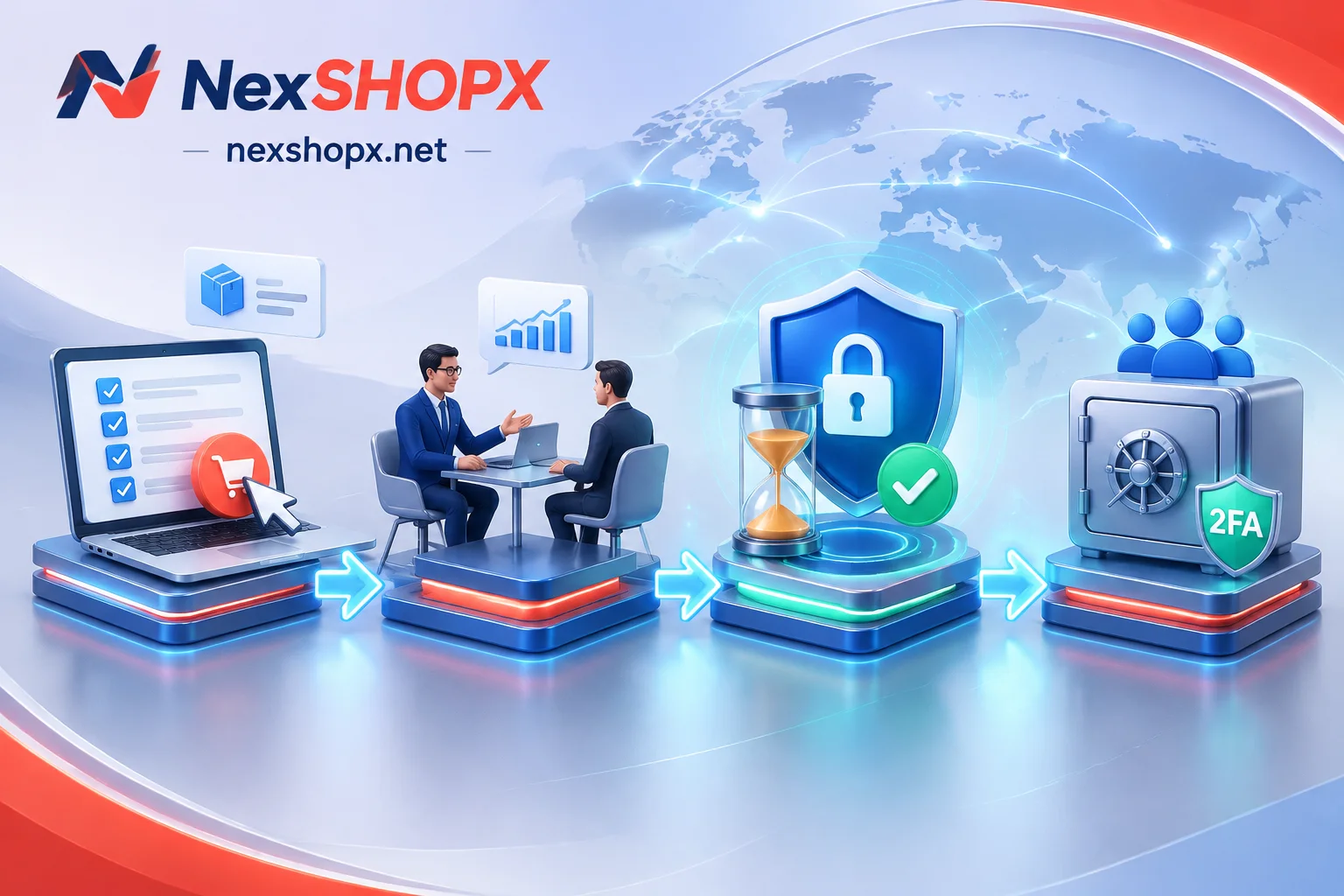
Choosing the right categories is only the first step; what determines account survival rate and asset security is the enterprise's internal procurement and handover execution discipline. It is recommended that enterprise procurement managers follow these four steps:
Step 1: Distinguish "In-Stock Direct Delivery" from "On-Demand Pre-Order" and Plan Scheduling Reasonably
When planning the procurement list on the NexSHOPX all categories page, purchasers need to note the differences in delivery mechanisms:
- Regular In-Stock Items: The mall supports registered or guest checkout; after payment confirmation, the system automatically delivers, and account information is directly displayed on the order page. It can be retrieved at any time via the order query page with the order number, suitable for daily quick replenishment.
- Scarce and Custom Specifications: Such as cross-border e-commerce aged accounts, early-year Twitter aged accounts, bulk WhatsApp and Telegram accounts for specific countries, and various manually processed membership activation services all require prior confirmation of stock, regional specifications, and delivery schedule through Telegram customer service (@nextipkf). Bulk centralized procurement can also directly negotiate prices at this stage.
Step 2: Strictly Implement "Time-Limited First Login" and "Profile Modification Prohibition"
Many enterprises habitually stockpile a batch of accounts in spreadsheets after purchase and distribute them to employees a week later, directly resulting in loss of after-sales protection. According to the platform's terms of service and warranty rules:
- After account delivery, the recipient must be urged to complete the first login within the time limit specified on the product page and check the status.
- Do not blindly modify information: Whether password changes, email rebinding, or avatar/name modifications are allowed must strictly follow the instructions on the corresponding product page (some categories explicitly prohibit information modification during the warranty period). If abnormalities occur during first login, do not repeatedly try or immediately change the password; you can first refer to the site's troubleshooting guide for first login failures of newly purchased accounts.
Step 3: Manage 2FA with a Shared Mechanism to Achieve "Separation of Person and Account"
After accounts pass the first-login observation period and enter stable operation, enterprises should consolidate permissions. Never let employees bind the two-factor authentication (2FA) of core social media or email accounts solely to their personal phones. Teams can refer to the TOTP key setup method for multi-person shared accounts, store 2FA keys in the enterprise password vault, and during handover, verify security against the three login channel confirmation guide after account purchase to ensure employee turnover does not affect business continuity.
Step 4: Clarify Warranty Boundaries and Eliminate Aggressive Violation Operations
Enterprises need to clearly communicate compliance red lines to frontline operations and media buyers: during the warranty period, non-human-caused deactivation can be replaced according to product page rules; however, if triggered by failure to first login on time, violation of profile modification restrictions, chaotic account sharing across multiple locations, or mass adding contacts and sending private messages immediately after receiving a LinkedIn account, or aggressive violation ad delivery immediately after receiving a Facebook unlocked account, platform anti-fraud risk control is not covered by the warranty. Only by following an operational rhythm of "environment matching and gradual progress" can purchased finished accounts maximize commercial value.
Conclusion
In the competitive landscape of refined global expansion in 2026, enterprise overseas account procurement is no longer simply "buying a login credential" but a supply chain management project concerning team efficiency, marketing continuity, and digital asset security. By sorting out the real specification needs of each role and relying on the NexSHOPX mall to establish a standard closed loop of "role-based selection—centralized bargaining—standardized first login—secure handover," global enterprises can truly shed the worries of underlying infrastructure and devote all energy to business growth in global markets.