 NexSHOPX-官方新闻
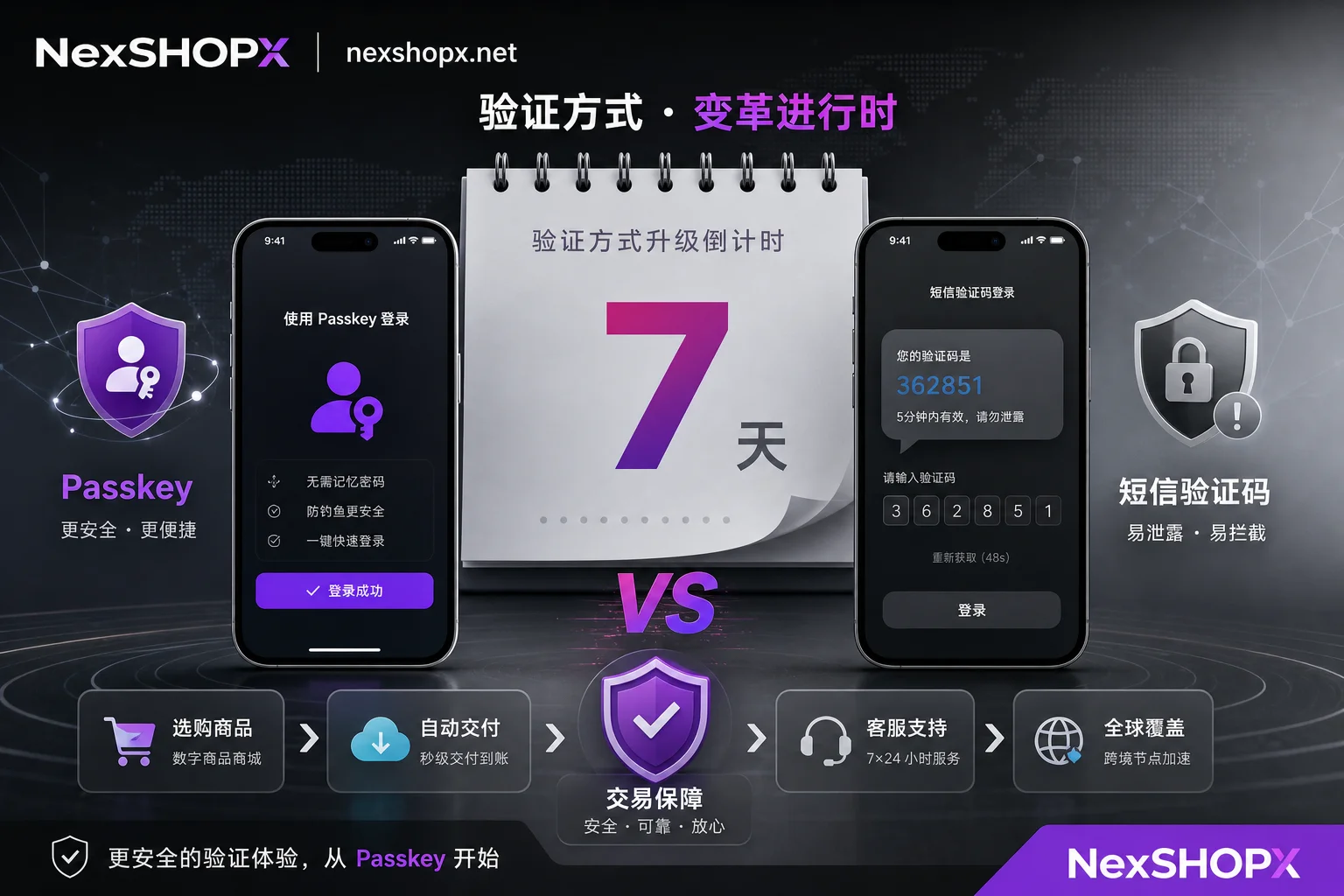
How to choose an overseas account platform? Compare four things first: information transparency, delivery form, after-sales boundaries, and communication records. Price and delivery speed come last. Whether an account truly belongs to you depends on where secondary verification and recovery entry points are located, not whether SMS can be received. According to Microsoft's official announcement, from September 1, 2026, Microsoft Entra ID will set Passkey as the default verification method and plans to retire native SMS and voice verification codes on February 1, 2027. This means old selling points like "fast OTP reception" are becoming less valuable.
Criterion One: How to Determine If an Account Platform Is a Middleman—Check If Information Can Be Verified Independently
Information transparency is the first filter. Good platforms publicly display account categories, registration regions, creation time ranges, current binding status, and applicable/non-applicable scenarios on product pages; middlemen often require private chats and piecemeal questions, with answers varying by context.
The verification action is simple: first check the granularity of information on the product page, then ask customer service the same question repeatedly to see if the two responses are consistent. The less searchable the information, the harder it is to provide evidence later.
Criterion Two: Does Seller Providing Only Account and Password Count as Delivery Completion?
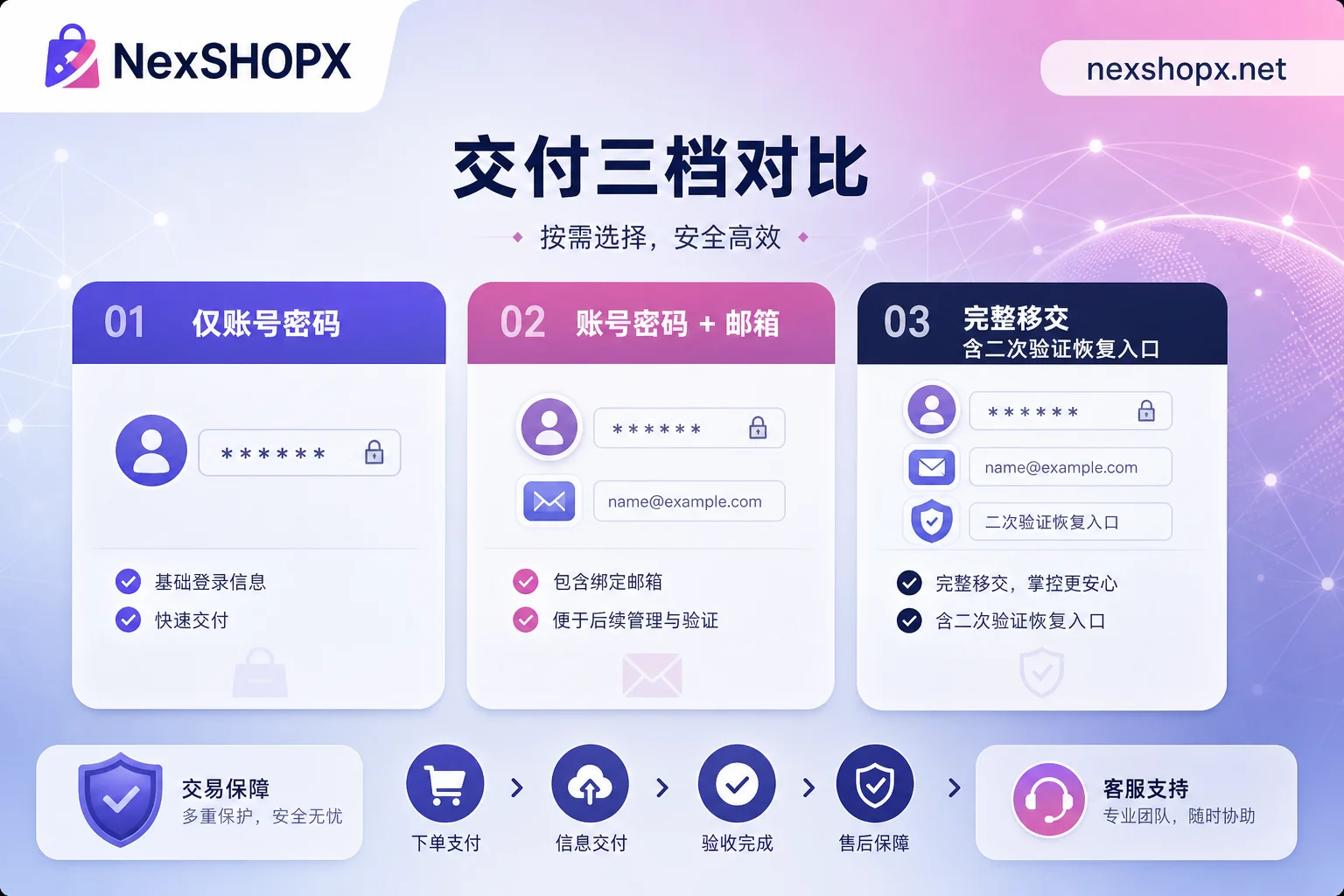
This is the core criterion. Delivery typically has three tiers:
| Delivery Tier | Included Content | Applicable Scenarios |
|---|---|---|
| Basic | Account and password only | Temporary testing, low-value use |
| Standard | Account and password + controllable email | Long-term use with ability to change password |
| Complete | Account and password + email + assistance with secondary verification and recovery entry handover | High-value uses like ad placement and business tools |
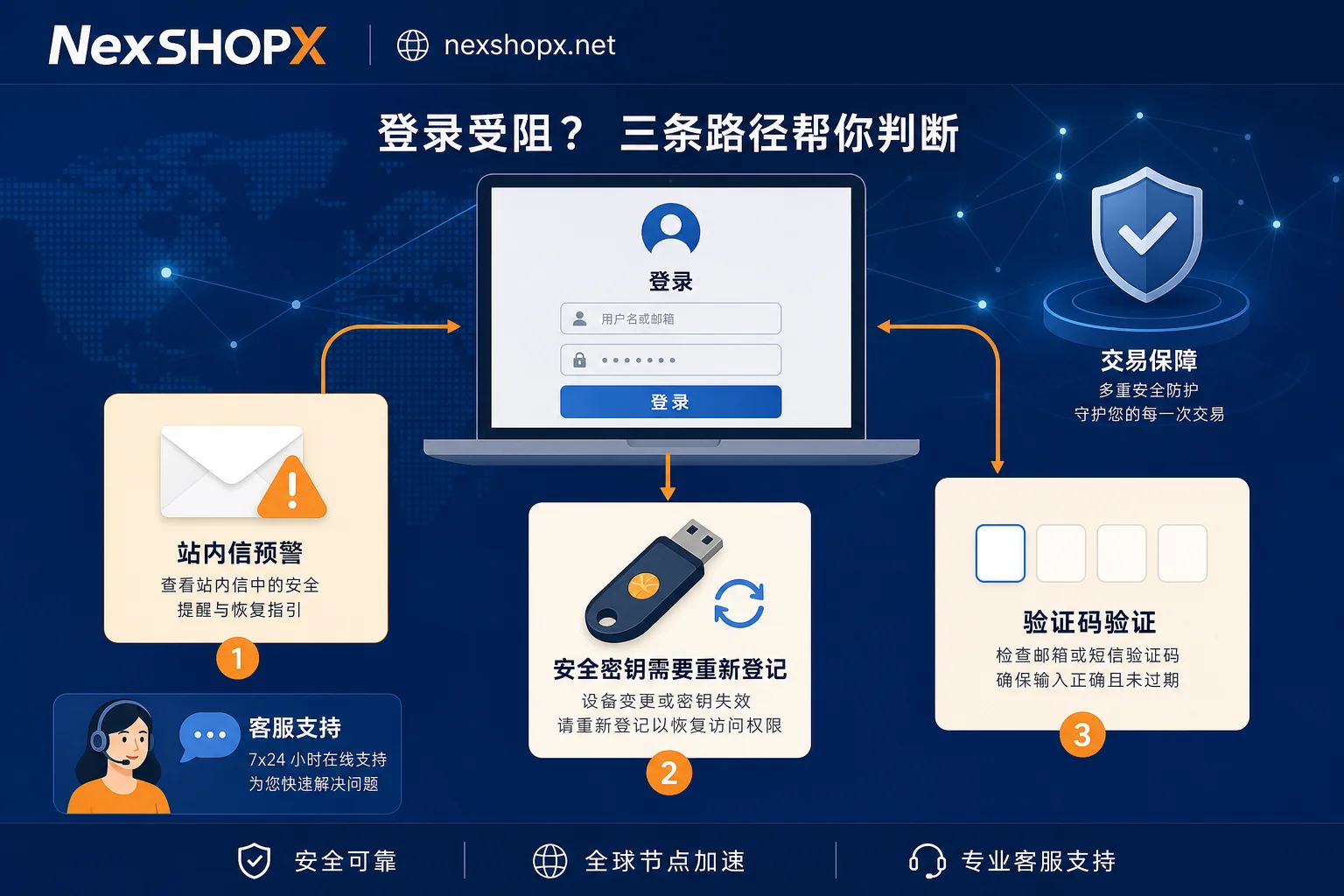
Microsoft will default to guiding Passkey registration from September 1, 2026, and will retire native SMS and voice verification codes from February 1, 2027. This means "seller assists with OTP" is a capability with a clear expiration date. Meanwhile, Google Workspace administrator accounts now enforce 2-Step Verification (2SV); unconfigured accounts will be directly restricted from accessing the Admin Console, and adding a new admin role will immediately trigger enforcement. Therefore, before ordering, you must ask three questions: Where is the verification method currently tied? Are the recovery email and backup codes for secondary verification of overseas accounts handed over with delivery? Will the platform provide assistance within the after-sales window when you change verification methods yourself?
Criterion Three: The More Specific the After-Sales Boundaries, the More Worthwhile to Order
Vague "full after-sales" is vastly different from verifiable "limited-time support for login failures." When verifying after-sales, at least ask the following four items:
- Does the time window start from order placement or from delivery?
- Does coverage specify situations other than "login failure," such as risk control checks or feature restrictions?
- What evidence is required for reporting issues, such as first login screenshots, timestamps, and original error messages?
- Is paid assistance available after the after-sales window?
It must be clear: after-sales can cover issues from the delivery process but cannot cover the target platform's terms and risk control outcomes. Any promises like "never banned" or "guaranteed to pass verification" should be rejected outright.
Criterion Four: Can Order, Delivery, and Issue Reporting Leave Records?
Self-service ordering and fixed customer service channels are better than pure private chat and verbal agreements. Self-service ordering on a mall generates orders and product snapshots, and customer service channels have conversation records, providing a baseline for issue reporting. Recommendation: On the delivery day, save the original delivery information, first-login screenshot, and timestamp. Any verbal promises should be repeated through the customer service channel.
Why Old Standards Are Failing: Verification Sovereignty Replaces "OTP Speed"
Back to the question of how to choose an overseas account platform, old evaluation criteria are failing—Microsoft's Passkey default and SMS retirement countdown, Google's mandatory 2SV for admins, together shift the definition of "account control" from "ability to receive verification codes" to "who holds credentials and recovery entries." A common misconception is that importing cookies for passwordless login is not a long-term solution; cross-environment use will trigger secondary verification. When evaluating platforms, see whether they understand and proactively explain this change rather than continuing to use OTP speed as a selling point.
Three Common Reasons for Unusually Low Prices—and Where They Expose You
Unusually low prices usually correspond to three situations:
- Information granularity omitted: Exposed when verifying status;
- Delivery stops at username/password: Exposed when changing secondary verification at first login;
- Extremely short after-sales window or no responsibility: Exposed when reporting issues.
Mapping price differences back to these four criteria is the practical way to choose an overseas account platform.
By Use Case: Testing, Customer Service, and Advertising—Which Criterion Matters Most
| Use Case | Criterion to Prioritize | Reason |
|---|---|---|
| Development testing | Information transparency and batch consistency | Large volume, low per-account value |
| Customer service and social media management | Verification method and recovery entry handover | Need for long-term stability and control |
| Advertising and business tools | Strictest delivery acceptance | Highest risk; consider live verification and commercial asset credentials |
Meta will implement video selfie liveness verification in July 2026 and require accounts involved in ad placement to bind Passkeys, further increasing verification intensity for high-risk scenarios. For example, when purchasing specific categories like those mentioned in the Outlook account purchase guide, you should also first compare against the above criteria.
How NexSHOPX Maps to These Criteria, and Its Boundaries
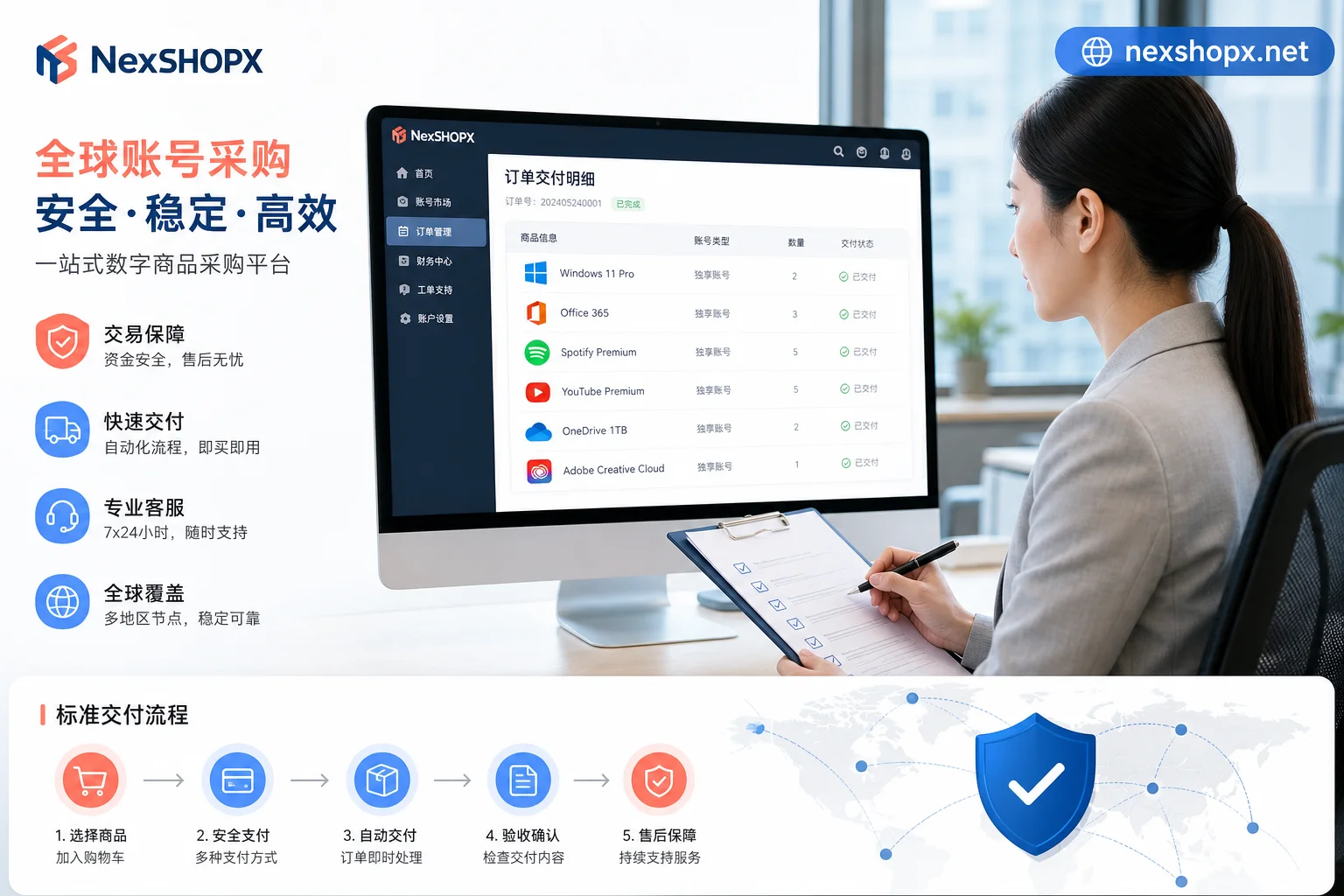
In enterprise overseas account procurement scenarios, NexSHOPX's category search corresponds to Criterion One (information transparency), the overseas account delivery process via self-service orders ensures delivery records, Telegram round-the-clock customer service provides an issue-reporting channel, and limited-time after-sales for login failures operationalizes "after-sales coverage." Its boundary: the platform can reduce information asymmetry and delivery uncertainties but cannot assume responsibility for target platform terms, identity verification, or risk control outcomes.
Compliance Reminder: Confirm Terms, Local Laws, and KYC Requirements Yourself
Before purchase, review the target platform's terms of service, account transfer regulations, local laws, and identity/KYC requirements. No vendor can substitute for these obligations, and there is no compliant path to bypass identity verification.
Final Suggestions: Turn Criteria into a Pre-Order Checklist
We suggest you compile these four criteria into a pre-order checklist. First, determine the criterion you must hold according to your use case, then compare prices. If you need to see category and status information first, you can search by category on the NexSHOPX mall and clarify any uncertain questions through the customer service channel before deciding.
FAQ
Q: Does the seller only providing username and password count as delivery completion?
A: Not complete delivery. Especially after Microsoft and Google tighten verification methods, if recovery email or backup codes are not handed over, you may not be able to handle secondary verification. At minimum, require a controllable email and confirm the verification method's ownership.
Q: Do account trading platforms support refunds?
A: Reputable platforms usually offer limited-time after-sales for delivery issues but rarely support unconditional refunds. Focus on the after-sales terms: whether they cover login failures, whether time-limited, and whether evidence is required. If a platform promises unconditional refunds, be cautious instead.
Q: What questions should I ask the seller before buying an account?
A: At least ask five types: account registration region and creation time, current binding status, where verification method is tied, whether recovery email and backup codes are provided, and after-sales coverage and time window. Preferably ask through customer service channels for records.
Q: Why do prices vary greatly among overseas account platforms?
A: Price differences often stem from varying information granularity, verification assistance, and after-sales breadth. Low prices often mean omitted information or delivery ending at username/password. Judge based on Criteria One to Four rather than comparing prices alone.


Comments(0)