 NexSHOPX-官方新闻
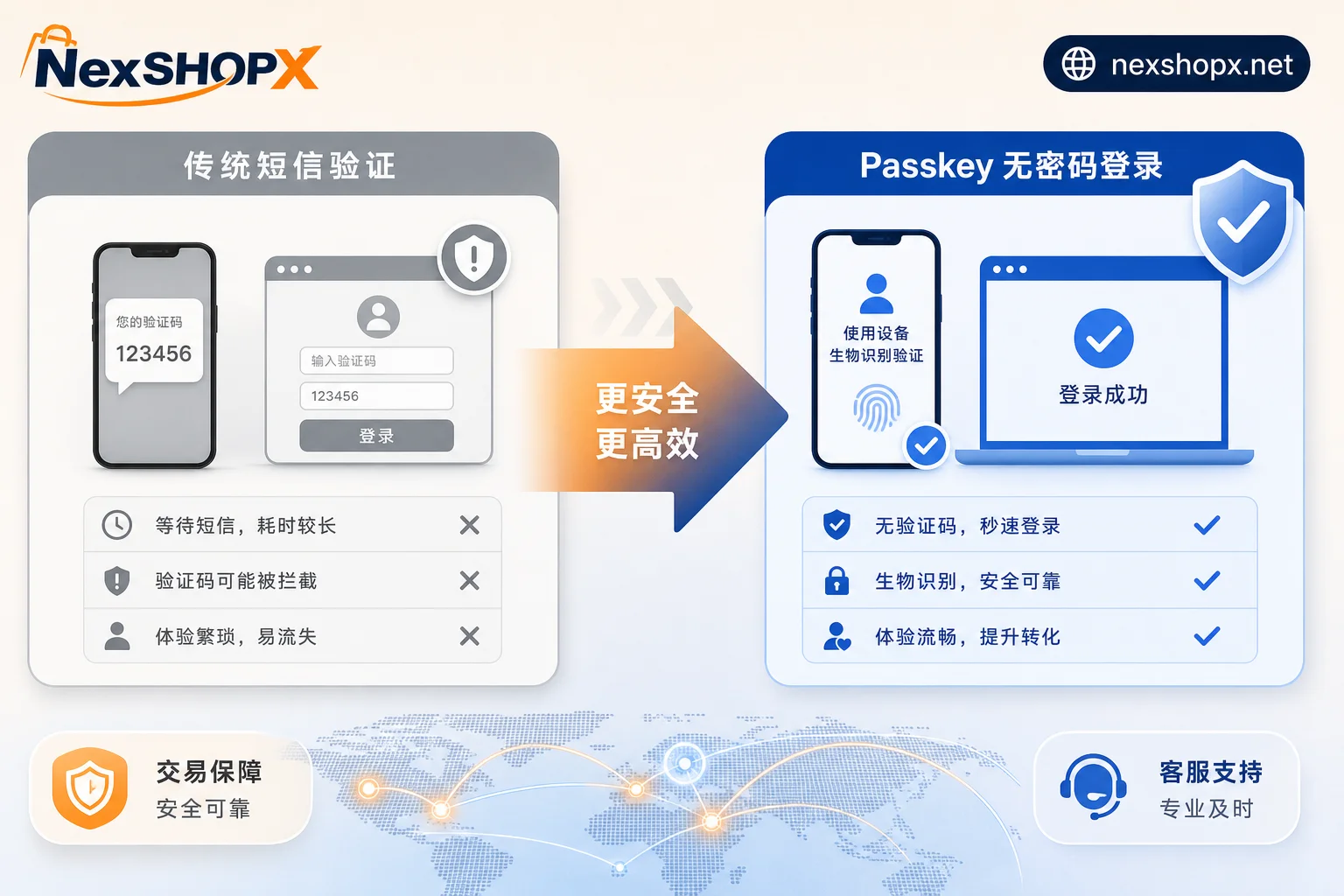
The first step in comparing account purchase platforms is to shift focus away from price and inventory quantity, moving to six verifiable criteria: credential delivery level (highest weight), after-sales acceptance policy, responsibility for first login, order and delivery format, category and purpose fit, and whether compliance boundaries are clearly stated. Among these, credential delivery level carries the most weight because Telegram natively introduced Passkey in version 12.2.1—the private key is stored on the previous holder's local device chip or cloud keychain and is tightly bound to the device (Telegram official blog, December 2025). This means the old logic of 'delivering account and password equals completion' is no longer valid at the protocol level. If on receipt day you don't check and terminate other active sessions, the previous holder may still silently log back in via local Passkey.
Bottom Line First: Why Price and Inventory Comparisons Are Obsolete
The answer to comparing account purchase platforms is straightforward: don't look at who has the lowest price, most stock, or best reviews; instead, check each of the six criteria. The weighted order is: credential delivery level > after-sales acceptance policy > responsibility for first login > order and delivery format > category and purpose fit > compliance disclosure. The first two determine whether you can 'use it continuously'; the latter four determine 'who to contact and how to prove it' when problems arise. Starting in 2026, mainstream platforms are phasing out SMS verification codes, and old price-comparison logic won't help you avoid login bottlenecks and locked recovery channels. This article first clarifies observable points for each criterion, then provides a checklist you can directly send to sellers, and finally uses the same criteria to review a typical platform, helping you translate abstract standards into real-world procurement.
Criterion One: Category and Purpose Fit—Determine What Account You Need Based on Your Business Scenario
The first step in comparison is to think about what you want to do with the account, then deduce which type you need. For ad testing accounts, look at whether the account is bound to a payment method and its historical activity; for customer service communication accounts, prioritize stable login and two-way messaging; for development testing, you need API permissions or enterprise backend access; for social media operations, evaluate whether it comes with followers or requires business verification. Check whether the platform categorizes accounts by purpose and whether product pages indicate the intended use scope. This is an observable distinction. Some platforms have clear categories, making it easy to select by scenario; others just list random accounts without any purpose annotation. If the latter, deduct points immediately.
Criterion Two: What Level of Credential Delivery? The Gap Among Four Levels
Delivery tiers can be broken down into four levels, each differing in control:
| Tier | What's Delivered | What's Missing / Risk |
|---|---|---|
| Level 1 | Credentials only | Can't change phone or email binding; no recovery channel when platform triggers risk control |
| Level 2 | Credentials + backup email | Backup email may still be controlled by previous holder; risk of silent recovery |
| Level 3 | Recovery entrances (backup email & recovery options) handed over together | If the target platform still supports SMS recovery, it depends on changing phone number, but SMS channels are being phased out |
| Level 4 | Backup Passkey & offline recovery key ownership clearly defined | Recovery doesn't depend on SMS, but requires completing device binding and session cleanup on the day of handover |
For example, on Telegram, the Passkey private key remains on the previous holder's device. If the buyer only gets credentials, the previous holder can still log in via device biometrics. So on receipt day, you must: ① log in and immediately check the list of logged-in devices; ② terminate all sessions except the current one; ③ if the platform supports it, bind your own Passkey or recovery key. These three steps are standard overseas account permission handover actions; missing any could leave a backdoor for the previous holder.
Why Criterion Two Has the Highest Weight: SMS Recovery Is Being Systematically Phased Out
This isn't an isolated platform move but an industry trend. Microsoft officially announced that Entra ID will make Passkey the default experience from September 1, 2026, and completely disable native SMS and voice MFA by February 1, 2027 (Microsoft Tech Community blog, July 13, 2026). OpenAI has offered advanced account security mode since April 2026, forcing FIDO2 Passkey or physical security keys and turning off email and SMS recovery, with customer service unable to help recover (OpenAI official announcement, April 30, 2026).
For buyers, this directly means: the traditional handover approach centered around 'changing phone number to receive SMS' is losing support. When comparing account purchase platforms, you must ask the seller—does the backup Passkey and offline recovery key transfer with the account? If they don't even know what Passkey is, it indicates their delivery level is still at the first or second tier, posing high risk.
Criterion Three: Is Order and Delivery Format Transparent and Self-Verifiable?
Self-service ordering versus manual negotiation shows significant differences in information symmetry:
| Comparison | Self-service ordering platform | Manual negotiation |
|---|---|---|
| Product info | Parameters, price, delivery time visible | Relies on customer service verbal response; inconsistent standards |
| Order records | System-generated, traceable | Chat records easily lost; difficult to provide evidence |
| Delivery time | Whether delivery time is indicated in advance | No fixed commitment |
Transparent delivery format seems like a UX issue, but it's essentially about evidence—when problems arise, you need a traceable order and delivery record, not just 'we told you at the time.' When comparing, prioritize platforms with order systems and complete product pages; if manual negotiation can't provide written confirmation, be cautious. Also, responsible platforms proactively state login failure after-sales and time-limited policies on the product page rather than being vague until you ask.
Criterion Four: How Is Responsibility for First Login Defined? Successful Login Doesn't Equal Delivery Complete
First login failures generally fall into three categories:
- Buyer environment issues: IP region, device fingerprint, browser configuration trigger risk control;
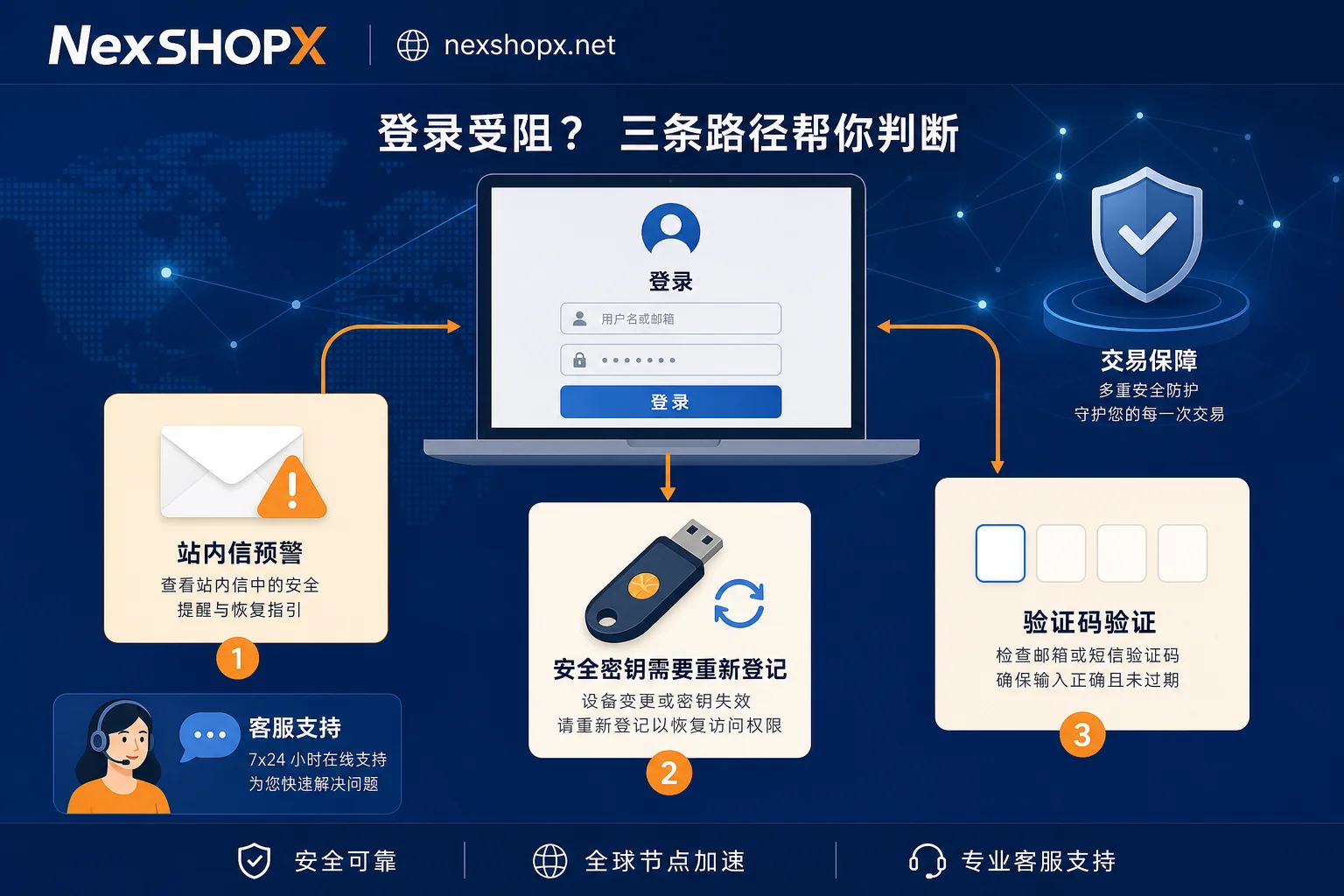
- Platform risk control tiered blocks: common scenarios are org-forced two-step verification expired or SMS verification channel adjustments triggering policy blocks—passwords and accounts themselves are usually intact;
- Incomplete delivery: insufficient credential level, e.g., no recovery entry or backup key provided, preventing the buyer from completing subsequent verification.
When comparing platforms, check if they clearly state responsibility assignment for these three categories upfront. Good sellers will clarify which situations are delivery issues (with after-sales) and which are buyer network/operational issues requiring self-troubleshooting. The worst is when sellers attribute all failures to 'your network is bad,' making after-sales a hollow promise.
Criterion Five: Is the After-Sales Acceptance Policy and Evidence Requirements Clearly Stated?
'Has after-sales' and 'clear after-sales policy' are two different things. Break after-sales into four comparable variables:
| Variable | Questions to Ask |
|---|---|
| Acceptance scope | What counts as a delivery issue? Does it include login failures or functional restrictions? |
| Time window | When does the limited-time after-sales start? From receipt day or after confirmation? |
| Evidence | What screenshots are needed? Is the full error message required? |
| Resolution | Replacement, exchange, or refund? How fast? |
All of these should be clearly answered on the product page or by customer service before ordering. If they can't provide written policy or promise too much (like 'permanent after-sales'), be wary—account usage is governed by the target platform's rules; no one can promise permanent usability.
Criterion Six: Are Compliance Boundaries Clearly Communicated?
Responsible platforms proactively state capability limits and user responsibilities: compliance with target platform terms, local laws, and real-name/KYC requirements; they do not imply bypassing audits or identity verification. Conversely, if a seller claims 'buy a real-name account for permanent audit-free and direct listing' or hints that 'tampering with fingerprint browser parameters can bypass face comparison,' such claims contradict the real-time facial verification common in high-risk steps like withdrawals on e-commerce platforms. Whether an account passes liveness detection cannot be guaranteed by the seller; such unverified risky operations often trigger permanent fraud risk control. Any source promising 'permanent usability, never banned' fails on compliance disclosure.
Six-Criteria Comparison Table: Check Off Each Item Before Ordering
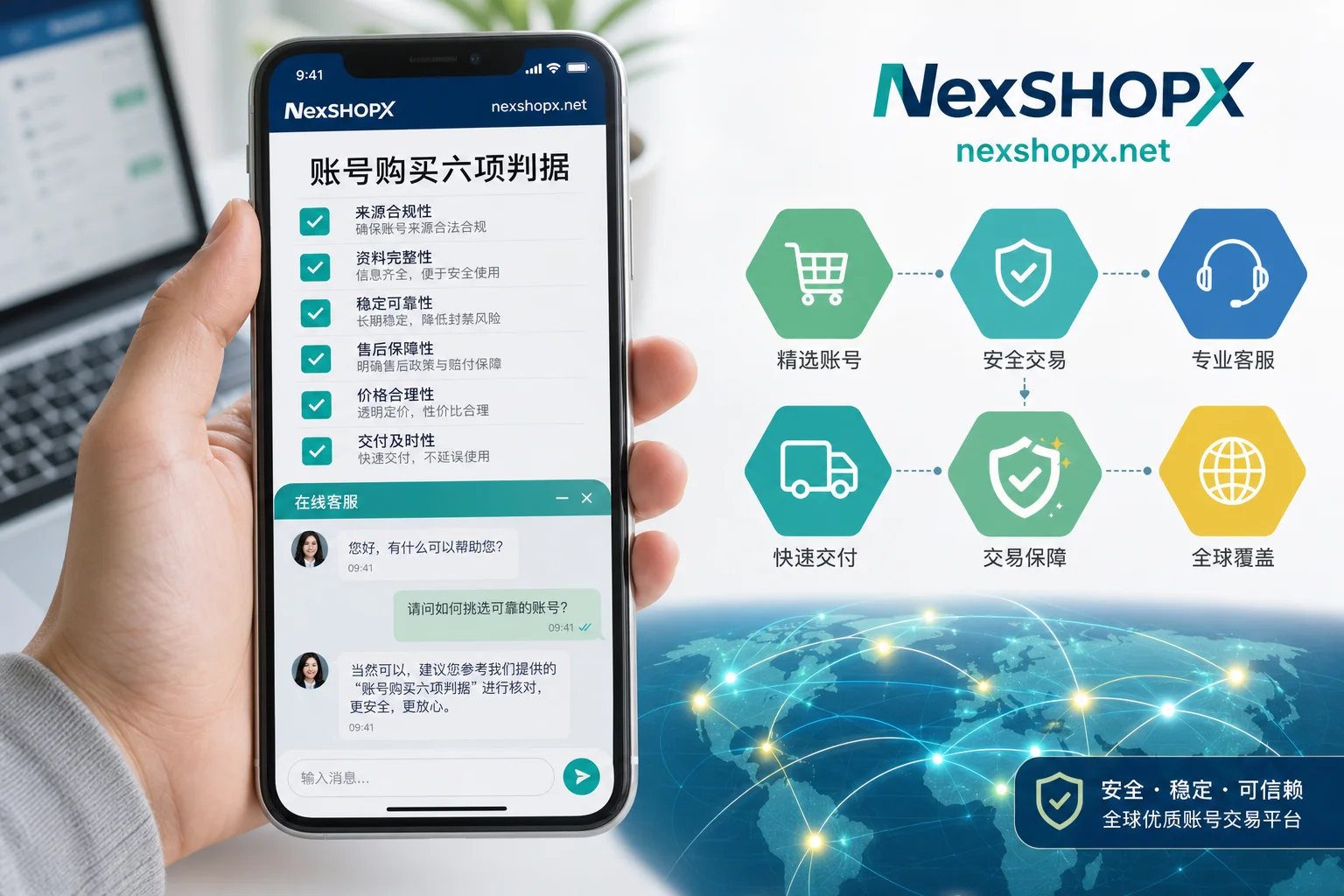
You can print the following checklist or send it to sellers line by line:
| Criterion | Must-Ask Question | Acceptable Answer Example |
|---|---|---|
| Category fit | Is this account for ad testing or customer service? What's its activity history? | Clearly state purposes and limitations |
| Delivery level | Does the backup Passkey and recovery key transfer with the account? | Yes, provided with the account |
| Delivery format | Is there an order system? Can you provide delivery proof? | Yes, traceable |
| Responsibility | How do you determine responsibility for login failures? | Explain in three categories |
| After-sales | When does the login failure after-sales window start? | Clearly state start time and duration (as per product page/customer service) |
| Compliance | Do I need to comply with target platform terms? Do you handle real-name verification? | Must comply on my own; do not handle |
Reviewing NexSHOPX's Position and Capability Boundaries with the Same Criteria
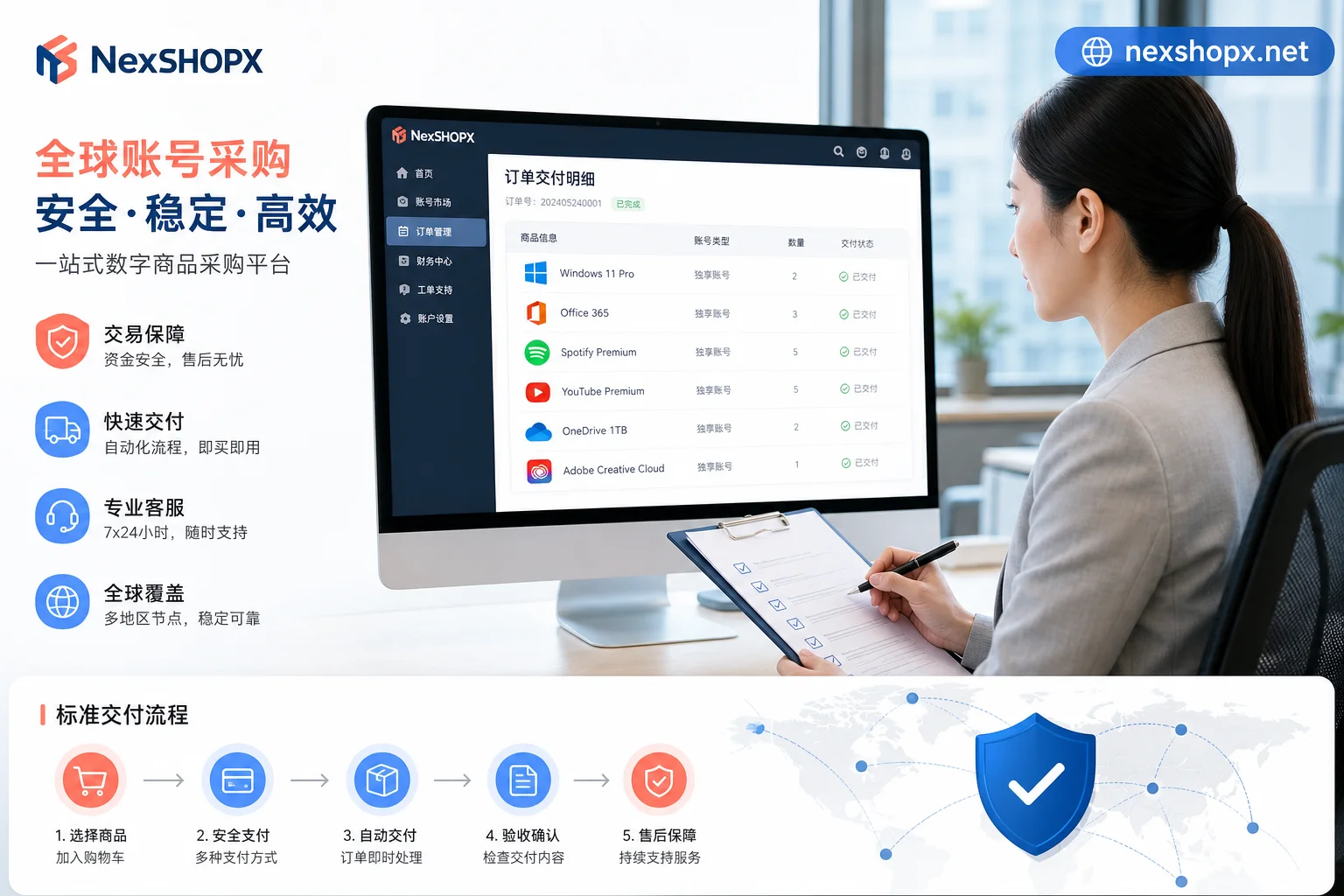
Using the table above to review NexSHOPX, its multi-category search (Instagram, Google/Gmail, Facebook, TikTok, Telegram, Threads, Apple ID, Outlook, LinkedIn, ChatGPT) addresses scenario selection in Criterion One; self-service ordering and fast delivery align with Criterion Three's transparency and traceability; Telegram 24/7 customer service and login failure time-limited after-sales correspond to Criterion Five's acceptance policy. Boundaries that must be stated are also present: no promises of permanent account usability or no bans, no real-name or facial verification handled on behalf of users, delivery level and after-sales details subject to product page and customer service statements, and users must comply with target platform terms and local laws. If you need a more comprehensive pre-purchase due diligence checklist, refer to enterprise overseas account procurement; for selecting sources by delivery format, see how to choose e-commerce account resources.
FAQ
What's the difference between buying an account with just credentials versus a recovery entry?
The difference is your ability to recover the account if you lose access. With only credentials, once the platform requires two-factor verification or triggers risk control, you receive no SMS and cannot change the phone number—effectively losing the account. With recovery entry (backup email or backup Passkey), you can initiate recovery yourself in anomalies, without having to beg the seller. Especially with Microsoft and OpenAI phasing out SMS recovery, accounts without recovery entry double in risk.
Self-service ordering or manual negotiation for buying accounts: which is better?
From comparability, self-service is better. Product specs, prices, and delivery time are written on the page; orders and delivery records are system-traceable, making evidence easy. Manual negotiation offers flexibility but verbal promises are hard to retain, standards vary, and disputes become unclear. If you really want a scarce source, at least ask customer service to send key commitments in writing and save records.
Which type of account platform has after-sales for login failures?
It depends on whether they include 'login failure' in the acceptance scope, not just 'account unusable.' Platforms offering such after-sales will specify the time window (e.g., a fixed window from delivery completion), required screenshots and error messages, and resolution process. Before ordering, ask customer service for a written explanation of scope, window, and evidence list and save it.
What questions should I ask sellers before buying an account?
Ask at least six questions: What are the account's usage restrictions? What does delivery include (credentials/email/recovery entry/backup Passkey)? Who is responsible for first login failure? How is the after-sales window calculated? What evidence will I need to provide? If facial verification or 2FA is encountered, can the platform assist? Answering these six filters out most unreliable sellers. For a more detailed question list, refer to account purchase after-sales service.
Can Passkey and recovery keys be transferred with the account?
Passkey private keys are device-bound; Telegram's Passkeys are stored on the device chip or cloud keychain, so theoretically the previous holder retains the private key. Transferability varies by platform; some support exporting recovery keys, others allow only offline keys. Before purchase, confirm whether the platform provides recovery keys or backup Passkeys, and ask if the seller transfers them; if no clear answer, lower the delivery level rating.
Before final ordering, turn the six criteria into your own checklist and ask each candidate seller, especially about credential delivery level and after-sales window—these directly determine if the account truly works for you. If answers are evasive, rather wait an extra day than rush to pay.


Comments(0)